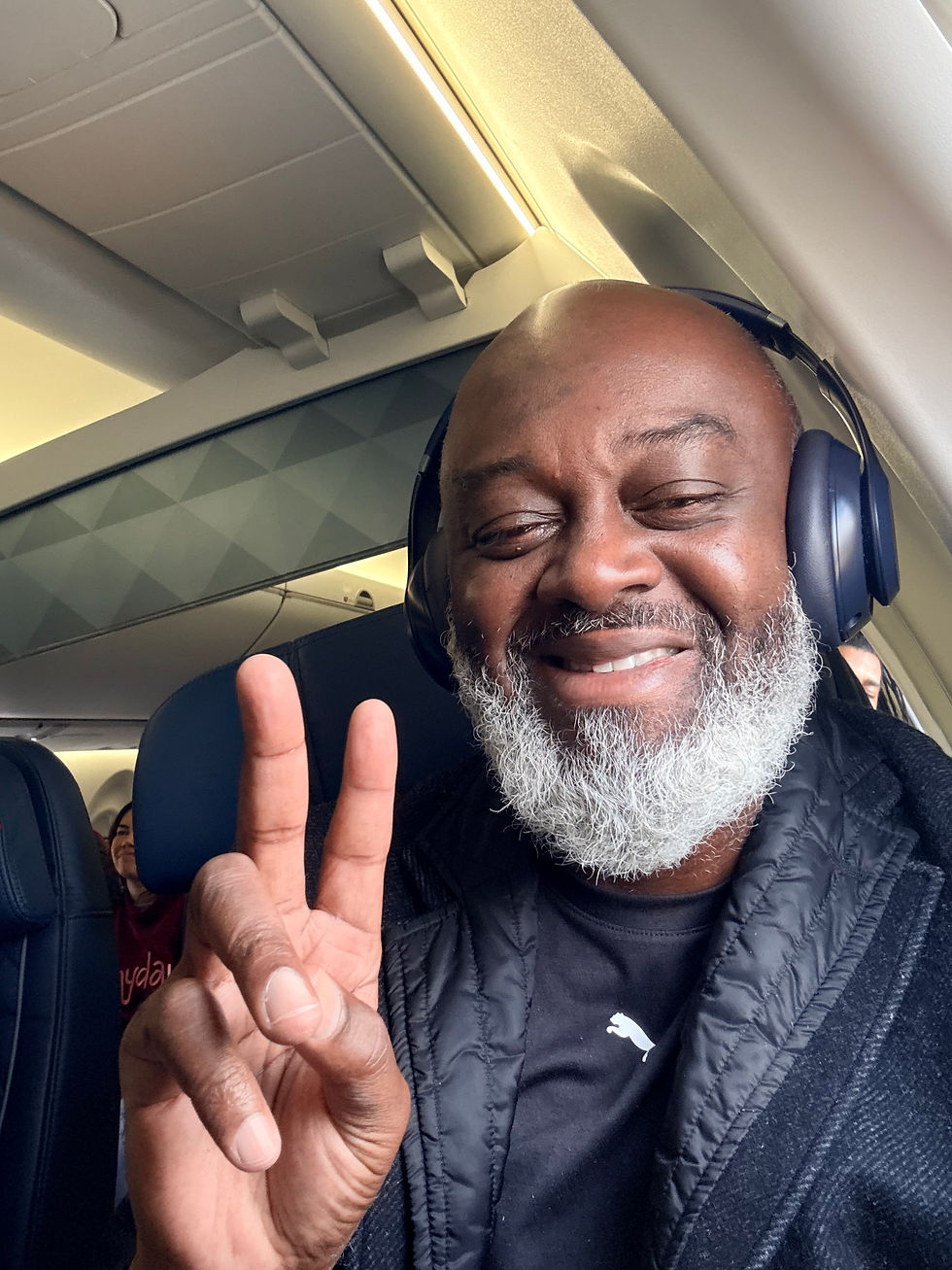
Before I Was Dr. Jenkins, I Was Spectac
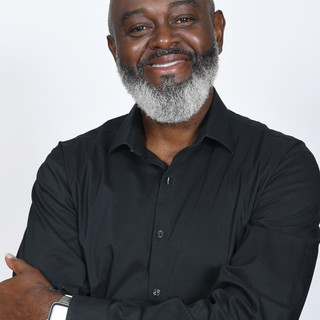
More than four decades of hip-hop, education, community, and discovering that the classroom was never that far from the mic.
A couple of years ago, I had the opportunity to sit down with the brothers and sisters at The Hilltop Glove Podcast for a conversation they called From the Classroom to the Mic: Dr. Mervin Jenkins' Hip-Hop Journey. The episode originally aired in November 2024.
Going back to that conversation two years later made me think less about what has changed and more about what has stayed with me.
Because my journey with hip-hop did not begin when I recorded a record. It did not begin when somebody called me Spectac. And it certainly did not begin when hip-hop found its way into my professional work as an educator.
For me, it goes back to around 1983.
I was a kid discovering a culture that I could not possibly have known would eventually influence so much of my life. More than 40 years later, I am still learning from it.
Before Spectac
Long before I understood words like pedagogy, engagement, or student voice, hip-hop was teaching me about all three. I just did not know that was what was happening.
Hip-hop taught me that words mattered. It taught me to listen to how someone said something, not simply what they said. It taught me about rhythm, timing, storytelling, competition, collaboration, creativity, and audience.
Most importantly, it showed me the power of voice.
I am here. I have something to say. My story matters.
Years later, those ideas would become central to how I thought about young people. Research now gives language to some of what I experienced intuitively. Robinson and Wheatley (2026), for example, examined educators who described hip-hop as formative to their personal and professional identities—not simply something they later brought into a classroom. That distinction matters to me. Hip-hop was part of my education long before I became an educator.
But back then? I just loved hip-hop.
Then Came Spectac
By 1993, that kid was not simply listening anymore. I had become part of the music.
My verse on Da Phlayva's underground track “Hookaz” became one of those early recorded markers in my journey as an emcee. Eventually there would be more music, more opportunities, collaborations, performances, friendships, mistakes, and lessons.
Spectac became part of who I was.
Spectac was not competing with the educator I would eventually become. He was helping build him.
Every time I wrote a verse, I was thinking about language. Every time I performed, I was thinking about audience. Every time I collaborated with another artist, I was learning about relationships. Every time something did not work, I had to revise. Practice. Listen. Try again.
Sound familiar?
Those are some of the same things I have spent much of my professional life asking students and educators to do.
The classroom was not nearly as far from the mic as I once thought.
Then Came Dr. Jenkins
Life has a funny way of connecting dots that do not seem connected while you are living them.
I became a teacher. Then a school administrator. Then a district leader. My work eventually took me into educational technology and onto stages around the country talking with educators about teaching, leadership, literacy, relationships, culture, and student engagement.
And somehow hip-hop kept showing up.
Not because I was trying to force it into education. It was already there.
The same kid who learned about the power of words through hip-hop eventually became an educator fascinated by the power of language. The emcee who understood that you had to connect with an audience became the teacher who understood that relationships mattered. The artist who wanted people to listen became increasingly interested in the students whose voices were not always being heard.
A 2024 systematic review of 68 peer-reviewed studies found that hip-hop-based educational experiences can help create culturally relevant learning contexts, support participation, and promote critical thinking (Laforgue-Bullido, Abril-Hervás, & Malik-Liévano, 2024). That does not mean hip-hop is a magic trick for engagement. For me, it reinforces something much simpler: culture can open a door. What we do once a student walks through it still matters.
Today, I am thinking even more deeply about literacy and what happens after we capture a student's attention.
Because engagement matters. Culture matters. Relationships matter. But those things have to take us somewhere.
Getting a young person interested in learning is powerful. Helping that young person develop the knowledge, language, confidence, and skills to navigate the world? That is the bigger mission.
Maybe that is another lesson hip-hop has been teaching me all along.
More Than 40 Years Later
Sometimes we separate our lives into neat little chapters: childhood, music, college, career, family, leadership, education.
But life rarely works that way. The chapters bleed into one another.
Spectac did not disappear when I became Mr. Jenkins. Mr. Jenkins did not disappear when I became Dr. Jenkins. The kid discovering hip-hop around 1983 is still somewhere inside all of them.
And I am grateful for that.
Because each version taught the next one something.
That is part of what Life Thru Music has always meant to me.
It is not simply about using music to teach. It is about recognizing that the experiences we collect along the way—music, family, classrooms, friendships, failures, successes, neighborhoods, books, conversations—help shape how we understand life.
Sometimes we do not recognize the lesson until decades later.
From the Classroom to the Mic—and Back Again
That is one reason I am glad the Hilltop Glove conversation exists.
Two years after it originally aired, I can listen to it differently. I hear stories. I hear names. I hear memories. But mostly, I hear the road that brought me here.
If you would like a deeper dive into the how and why behind my journey—from discovering hip-hop culture as a kid, to becoming Spectac, to education and the work I am fortunate enough to do today—I invite you to check out the full conversation:

And I want to give some love to the brothers and sisters at The Hilltop Glove Podcast.
I appreciate them not simply because they gave me a microphone and an opportunity to tell my story. I appreciate their commitment to community.
They create space for people to tell their stories. They preserve conversations. They connect people. And they remind us that community is not something we simply belong to. It is something we contribute to.
In their own way, they are doing something I hope all of us aspire to do:
Leave this world a little better than we came into it.
Much love to the entire Hilltop Glove family for doing their part—and for allowing me to share a little bit of mine.
The music is still playing.
And the journey continues.
References
Laforgue-Bullido, N., Abril-Hervás, D., & Malik-Liévano, B. (2024). Hip-hop and education: A literature review of experiences. International Review of Education, 70, 747–766. https://doi.org/10.1007/s11159-024-10069-7
Robinson, D., & Wheatley, T. C. (2026). Hip-Hop was my teacher: Framing hip-hop pedagogy through the voices of P-20 hip-hop educators. The Urban Review, 58, Article 26. https://doi.org/10.1007/s11256-026-00805-8
Dr. Mervin Jenkins | Life Thru Music | November 2026